

WHITE PASSAGE™ FOR TRAUMA
When Trauma Changes the Way You See Your Life
A serious illness, accident, violence, abuse, sudden loss, or other life-changing event can leave you unsure what is safe, what you can trust, and how you are supposed to move forward.
You may not be ready to “move on.” You may still be trying to understand how to live after what happened.
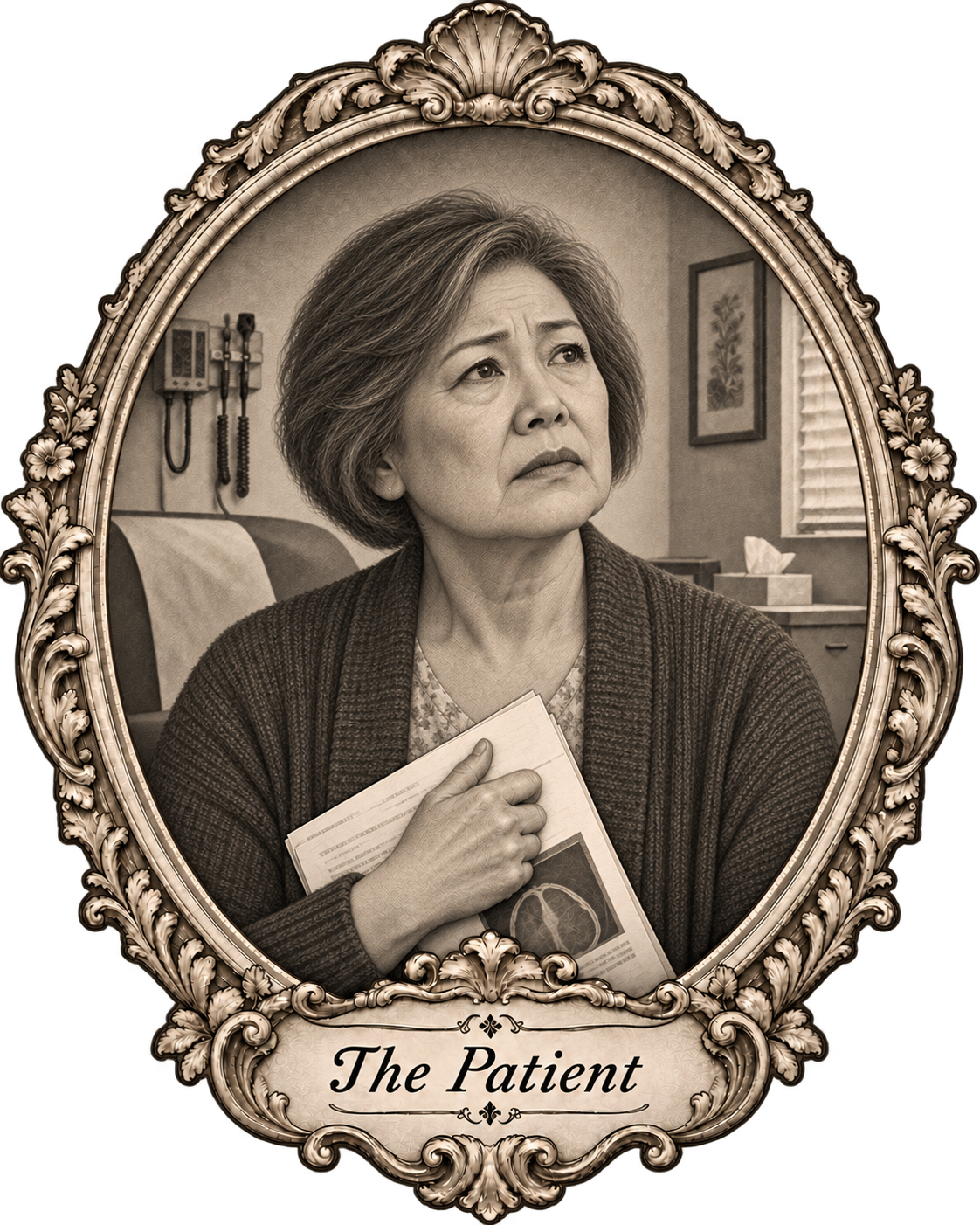
“How am I supposed to live like nothing happened?”
—The Patient
THE SHATTERING
Trauma Can Shatter More Than Your Sense of Safety
What happened may be over, but the way it changed your life can remain.
You may see yourself differently. Other people may feel less trustworthy. The future may feel less certain. Things you once took for granted may no longer feel guaranteed.
You may find yourself asking:
- How did this happen to me?
- Am I ever going to feel safe again?
- Can I trust people—or life—the way I used to?
- How much should what happened change the way I live now?
- How do I move forward without pretending nothing happened?
The event changed your life. The deeper struggle is figuring out what it should mean for the life that comes next.
↓ When the trauma changes your life this deeply, you’ve entered the Abyss.
THE ABYSS
“The waters closed in over me to take my life; the deep surrounded me…” — Jonah 2:5
When What Happened Changes Everything That Comes After
After a life-changing event, protecting yourself can start to shape more and more of your decisions.
You may avoid people, places, risks, relationships, plans, or possibilities because you never want to feel that vulnerable again.
You may also find yourself questioning things that once felt obvious:
Is the world safe? Can I trust my own judgment? Should I take chances again? What can I actually count on?
The Abyss begins when you are not only dealing with what happened—you have also lost confidence in how to live after it.
↓ White Passage is the way through.
THE WHITE PASSAGE
Find Your Bearings Before Fear Chooses the Direction
White Passage helps you look at how the event changed your life, separate reasonable caution from conclusions that may be keeping you stuck, and decide what you want to carry forward.
Depending on your situation, we may work through:
What Actually Happened—and What Changed?
Event Reconstruction
Put the major events in order so you can see what happened, what changed afterward, and where your sense of safety or direction began to shift.
Facts, Fears, Assumptions & Unknowns
Separate what is true now from what you fear could happen, what you have come to expect, and what you simply cannot know.
What Was Shattered?
Identify the beliefs and expectations the event disrupted—about safety, people, control, your body, the future, or life itself.
What Did It Change About How You See Life?
Event vs. Meaning
Separate what happened from the conclusions you formed because it happened.
Fear & Protection
Look at what you are protecting yourself from now and whether those protections still fit the reality you are living in.
What the Loss Revealed
Understand what the experience took from you and why those losses matter so deeply.
What Would Feeling Grounded Again Require?
Safety vs. Direction
Identify what genuinely needs to be safer and what may simply need a clearer path forward.
Control & Responsibility
Separate what you can influence now from what was never yours to control.
Reliable Reference Points
Find the people, beliefs, routines, values, and parts of life that can still help you know where you are.
What Can You Responsibly Do Now?
Your Real Options
Look at what is actually possible from where you are today without demanding a complete plan for the future.
Reality Testing
Take reasonable steps, see what happens, and learn the difference between real danger and the feeling that you are back in the Abyss.
The goal is not to pretend what happened no longer matters. It is to help you understand where you are now and begin moving again from a clearer place.
The goal is not to convince you that the world is safe. It is to help you decide how you want to live knowing that life can be uncertain.
White Passage is a non-clinical life-navigation framework. It does not diagnose or treat trauma, PTSD, or other mental health conditions.
↓ The Far Side is where clarity returns.
THE FAR SIDE
The Far Side Is Not Going Back to Who You Were
You may never see the world exactly the way you did before.
And that does not have to be the goal.
The Far Side means you understand more clearly what happened, how it changed you, what precautions still make sense, and what you refuse to let fear decide for you.
You can begin participating in life again without pretending that nothing bad can happen.
You know what still matters.
You know what risks you are willing to take.
And you have a clearer sense of how you want to live from here.
↓ You don’t need all the answers to begin.
“The goal is not to sail as though storms no longer exist. The goal is to raise your sails again knowing that they do.”
—Thomas Minieri

Questions We Take Seriously
Trauma recovery is full of advice that gets repeated so often it can start to sound like fact.
- Just focus on feeling safe.
- Don’t keep looking backward.
- If something triggers you, you’re not ready.
- Your nervous system is dysregulated.
- Healing isn’t linear.
Sometimes those ideas are helpful. Sometimes they explain only part of what is happening. White Passage is willing to look closer.
Is Feeling Safe the Same as Finding Your Way Again?
Feeling safer can matter.
But safety and direction are not the same thing.
You can feel calmer and still have no idea what to do with your life.
You can also feel afraid while making a sound decision.
After a major life disruption, the deeper question may be:
What changed about the way I understand myself, other people, the world, or my future?
White Passage does not require fear to disappear before you can begin finding your bearings again.
Should I Stop Looking Back and Focus on the Future?
Not always.
Looking backward becomes a problem when it keeps you trapped in an endless attempt to change what cannot be changed.
But sometimes you need to understand what happened because it changed the beliefs you were using to navigate your life.
What did you expect before?
What did the event prove was possible?
What conclusions did you draw afterward?
You do not have to live in the past to learn what the past changed.
Does Being Triggered Mean Something Is Unsafe?
Not necessarily.
Fear can contain useful information.
But fear can also become broader than the original danger.
A situation may remind you of what happened without actually being the same situation.
White Passage helps you ask:
“What is my fear warning me about—and what does the present reality actually show?”
The goal is not to ignore fear.
It is to keep fear from becoming your only source of direction.
Is “My Nervous System Is Dysregulated” a Complete Explanation?
It may describe part of what you are experiencing.
But it may not explain why this particular event changed your life so deeply.
What belief was shattered?
What did the event make you stop trusting?
What future suddenly became uncertain?
What are you now trying to prevent from ever happening again?
A description of what your body is experiencing is not always the same thing as understanding what your life has come to mean.
If Healing Isn’t Linear, How Do I Know Whether I’m Actually Moving Forward?
You may have good days and bad days.
Fear can return.
Grief can return.
Something unexpected may make you feel as though you are right back where you started.
That does not automatically mean you have lost your progress.
White Passage makes an important distinction:
Feeling disoriented again is not always the same thing as losing your orientation.
The question becomes:
Has something actually changed about my position and direction—or am I moving through difficult weather?
How Is White Passage Different From Therapy?
Therapy can be valuable for trauma treatment, emotional health, symptoms, relationships, and many other needs.
White Passage is designed around a different question:
How do I regain my bearings when what happened has changed the way I understand my life?
That means we may work through the event itself, shattered expectations, fear, assumptions, control, what still matters, the conclusions you formed afterward, and what reality is showing you now.
White Passage is not trauma treatment.
It is a structured process for recovering orientation after something happens that leaves you unsure what is true, what can be trusted, or where your life goes from here.
There is a passage we are working through together.
You remain the one who decides where it leads.
YOUR JOURNEY BEGINS
You Don’t Have to Know What Life Looks Like From Here Yet
Something happened that changed the way you see your life.
You may not know what is safe anymore, what you can trust, what your future looks like, or whether the person you were before still fits the life you have now.
You do not need the final answer to begin.
White Passage starts with where you are now—what happened, what changed, what conclusions you formed because of it, what still matters, and what you need to understand before choosing what comes next.
Ready to See If White Passage Is Right for You?
Book a private White Passage Orientation. We’ll talk about what brought you here, where you feel most lost, and whether the 90-day passage makes sense for where you are now.

Book Private White Passage Orientation with Thomas Minieri
Author of White Passage and creator of the White Passage method
90 Days. 9 Stages. One Guided Passage From Lost to Oriented Again.
White Passage™ is a structured 90-day journey for people whose lives have been disrupted deeply enough that they no longer know what to believe, what matters now, or what to do next.
You begin with the White Passage Survey to establish where you are.
Then, over nine stages, you work privately with White Passage author Thomas Minieri while moving through the Captain’s Log—33 guided entries that help you understand what shattered, why you ended up in the Abyss, regain your bearings, test a path forward, and reach the Far Side.
This is not an open-ended series of conversations. There is a passage we are working through together.
Your White Passage Includes
White Passage Survey
Your starting assessment. Before your first Navigation Session, you complete a structured survey to identify what shattered, where you feel most lost, the decisions in front of you, and where your passage needs to begin.
9 Private Navigation Sessions
Work one-on-one with White Passage author Thomas Minieri throughout the 90-day journey. Each session has a purpose within your passage—not simply whatever happens to be on your mind that week.
The Captain’s Log
Your personal guide through White Passage: 33 guided Log Entries plus the final Landfall Letter, taking you from Shattering through the Abyss, Reorientation, the White Passage, and the Far Side. You aren't simply reading it. You're creating a record of your own passage as you go.
Navigator's Instruments
Your passage includes tools chosen for your situation. For trauma and major life disruption, these may include:
- event reconstruction
- facts / fears / assumptions mapping
- shattered belief and expectation review
- loss and meaning work
- control and responsibility sorting
- future options and path planning
- reality testing
Between-Session Guidance
Support while you're actually crossing—not only while you're sitting in a Navigation Session.
Landfall Plan
At the end of your 90 days, we bring the passage together: what you now understand, what may remain uncertain, what matters, what direction you have chosen, and what you need to watch as you move forward.
You leave with a clearer map—not just memories of the conversations that got you there.
Start Your White Passage™
You don't need to know where the journey ends. You only need to know you're ready to find your way.
Your first step is a private White Passage Orientation. We’ll start with what happened, where you feel most lost, and what you’re trying to understand or decide.
Book Private White Passage Orientation with Thomas Minieri
Author of White Passage and creator of the White Passage method
Shattered
Read the Blog Journal
Articles on betrayal, loss, identity, faith, career collapse, and what happens when life stops making sense.
About Thomas
Meet the Author
The story behind White Passage, what shaped it, and why Thomas created a framework for finding direction after life falls apart.
Common Questions
Understand the Passage
Answers about what White Passage is, how the 90-day process works, what it is not, and whether it fits where you are now.